
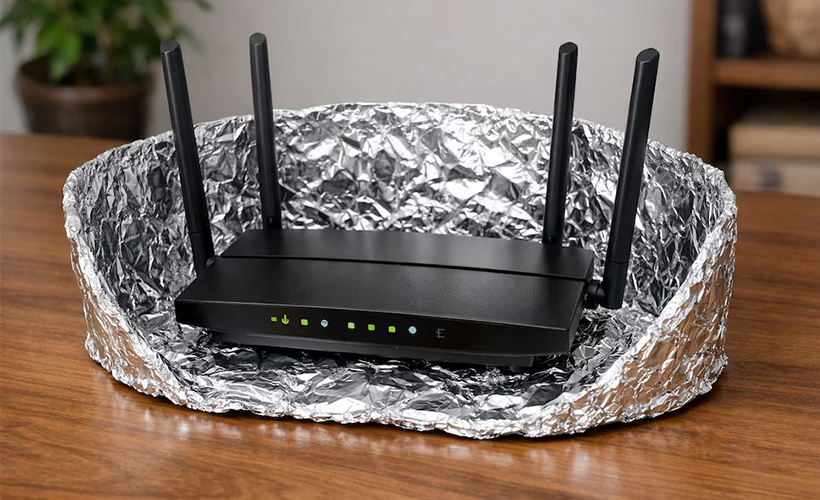
Aluminum Foil on the Router Improves Wi-Fi Connection: Truth or Myth?
Research suggests improvements of up to 50% in specific areas using reflectors made of this material.
The use of aluminum foil behind a router has become popular as a viral trick that promises to improve your internet signal without the need to invest in additional equipment. This practice is based on physical principles, since aluminum can act as a reflector for electromagnetic waves and, in theory, direct the signal toward specific areas of the home. However, specialists warn about its limitations and caution that the results obtained depend on various factors.
How Does the Aluminum Foil Trick Work?
The technique consists of placing a curved sheet of aluminum foil behind the router’s antennas with the goal of concentrating the signal in a specific direction. Normally, routers emit signals in all directions, but with the aluminum, propagation is directed toward the front. This can benefit areas where coverage is weak, such as distant bedrooms or spaces far away from the main equipment.
The physical principle behind this method lies in the fact that Wi-Fi signals operate on the 2.4GHz and 5GHz bands — frequencies capable of reflecting off metallic surfaces. By curving the aluminum in a manner similar to a parabolic antenna, the signal can be focused toward a specific point, improving its coverage in that area.
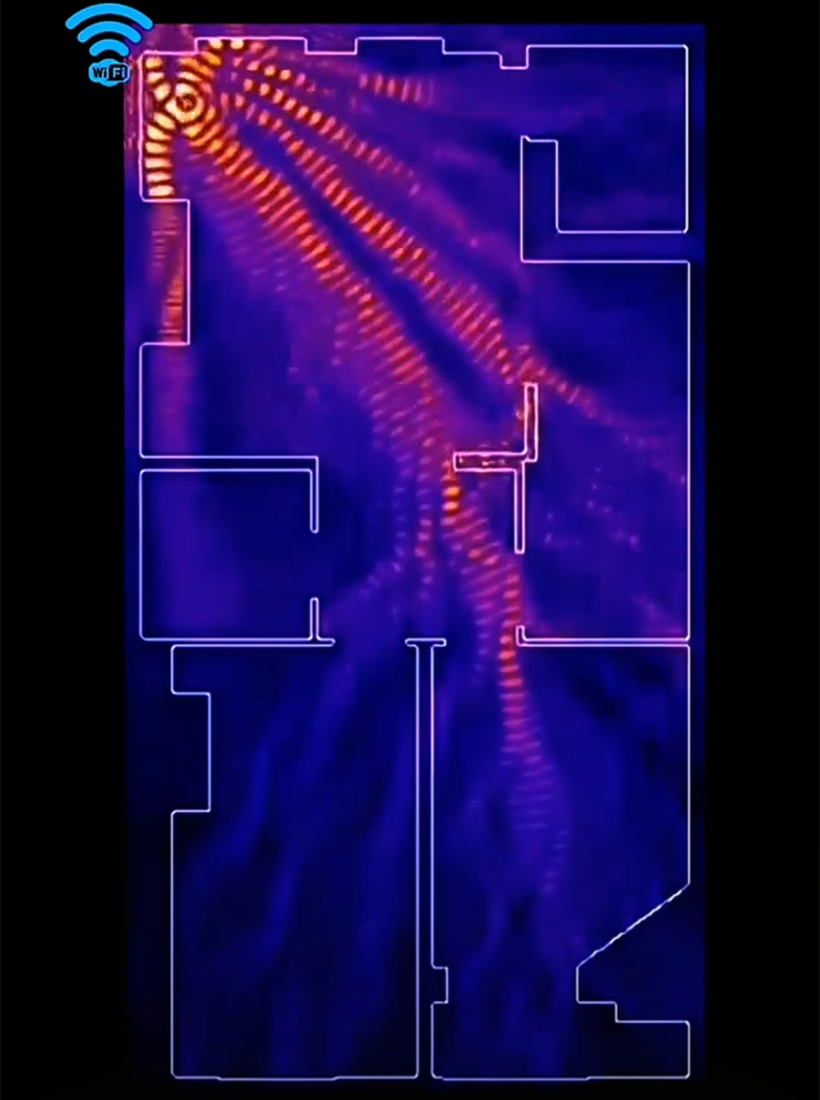
This Is How Wi-Fi Actually Travels Through Walls.
What Studies and Users Say
A study conducted in 2017 by researchers at Dartmouth College demonstrated that, by using custom 3D-printed reflectors, it is possible to optimize the distribution of a Wi-Fi signal in indoor environments. In controlled tests, improvements of up to 50% were recorded in specific areas, alongside a reduction in signal leakage to the outside.
In domestic settings, the results tend to be more modest. Users who have experimented with this trick report increases of between 10% and 20% in signal strength within the chosen zones, though performance heavily depends on factors such as space layout, building materials, and the location of the router.
How to Apply the Method Safely
To use this trick, it is recommended to follow a few basic steps:
- Unplug the modem for safety.
- Cut a rectangle of aluminum foil approximately 20 by 30 centimeters (around 8 by 12 inches) and shape it into a curve.
- Place the sheet behind the router’s antennas and aim it toward the area where you want to improve the signal.
- It is advisable to measure your signal strength and connection speed before and after the intervention using specialized apps. This check allows you to verify whether the modification actually brings a noticeable improvement to your coverage and service quality.
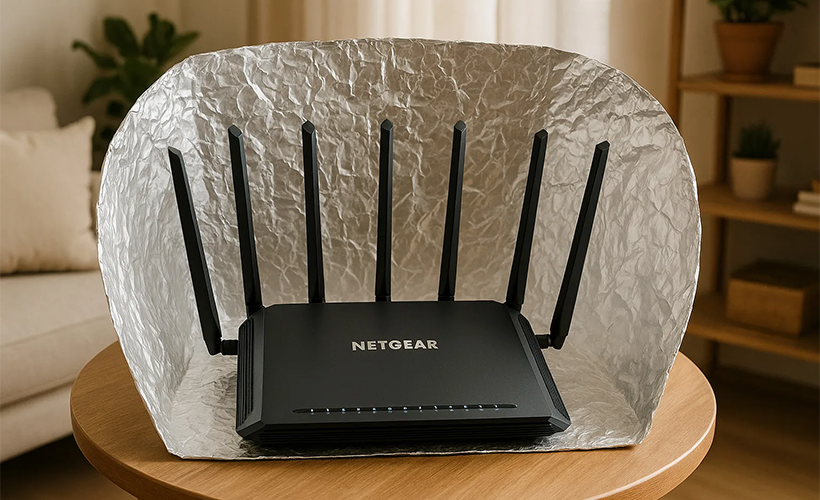
Despite its simplicity and low cost, using aluminum foil as a reflector has several limitations.
Limitations and Risks: What to Keep in Mind
Despite its simplicity and low cost, using aluminum foil as a reflector has several limitations:
- Directional restriction: The signal improvement only occurs in the direction the aluminum is facing, which can cause a reduction in coverage in other areas of the home.
- Structural obstacles: This method does not solve structural problems like thick walls, interference from other devices, or excessive distances between the router and connected equipment.
- Overheating risk: This is a crucial aspect. If the modem is completely covered with aluminum foil, the heat generated by the device can become trapped, affecting its operation and shortening its lifespan. For this reason, experts recommend using the material only as a partial reflector and avoiding wrapping the entire device.
More Effective Alternatives
Connectivity experts agree that the aluminum trick can work as an experimental or temporary tweak, but it is no substitute for standard solutions. For a reliable setup, they recommend:
- Placing the router in a central spot in the home.
- Installing signal repeaters.
- Investing in Wi-Fi mesh systems, which are designed to expand coverage evenly throughout a space.
In certain cases, aluminum can help reduce signal leakage to the outside, which increases privacy and makes it harder for unauthorized external users to access your network. However, the true effectiveness of this method will ultimately depend on the unique characteristics of your specific environment.
Links
- I tested aluminum foil, metal bowls, and antenna extenders on my Wi-Fi router — only one actually worked – How-To Geek
- Sell your pre-owned electronic gadget online – iGotOffer
ow much can Aluminum Foil Extend WiFi Range? [Video]
Video uploaded by Byte My Bits on July 8, 2017.




Facebook
Twitter
RSS